
Mastocytosis
Mastocytosis represents a heterogeneous group of rare disorders characterized by the abnormal proliferation and accumulation of certain cells in the body (**mast cells**) in one or more organs. Mast cells are specialized cells of the immune system which, when activated, release histamine, tryptase, and other substances, causing a wide range of allergic manifestations.
**Classification & Forms of the Disease:** Mastocytosis is classified according to the organs affected and the age at which it develops:
### **Cutaneous Mastocytosis**
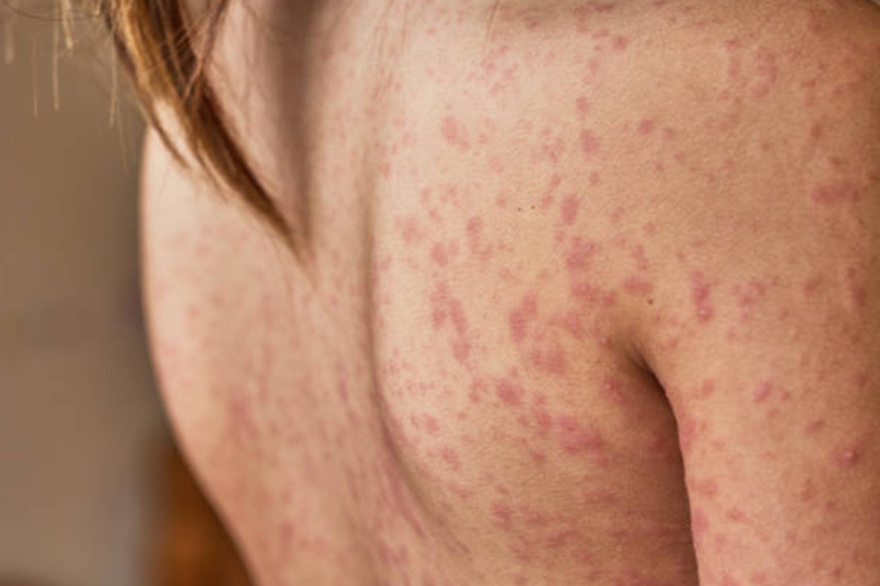
1. **In children:** This is the most common form and usually develops during infancy or early childhood. It presents with brownish skin lesions (**urticaria pigmentosa**) or as a single localized lesion (**mastocytoma**). The prognosis in children is excellent, as the disease often resolves spontaneously by adolescence.
2. **In adults:** Mastocytosis limited exclusively to the skin is rare, as cutaneous manifestations in adults are almost always part of generalized (**systemic**) disease.
### **Systemic Mastocytosis**
1. It occurs almost exclusively in **adults** and means that mast cells have accumulated in at least one organ outside the skin, such as the bone marrow, intestine, or liver.
2. In most adults (>90%), it is associated with a specific genetic alteration, the *KIT D816V* mutation.
## **Diagnosis & Allergy Evaluation**
Diagnosis is based on the criteria established by the World Health Organization (WHO):
1. **Laboratory testing:** Measurement of **serum tryptase** levels (levels >20 ng/mL are suggestive of systemic disease).
2. **Molecular testing:** Detection of the *KIT D816V* mutation in the blood or bone marrow.
3. **Histological examination & biopsy:** Skin biopsy (in children) or bone marrow biopsy (when systemic disease is suspected in adults).
## **Symptoms & Clinical Presentation**
Symptoms are caused either by the accumulation of mast cells in the skin and other organs or by the sudden release of substances such as histamine into the bloodstream:
* **Skin manifestations:** Brown or reddish spots or lesions.
* **General allergic symptoms:** Sudden redness and a sensation of warmth in the face and body (**flushing**), intense itching, nausea, vomiting, abdominal pain, diarrhea, or headache.
* **Anaphylaxis:** Patients, particularly those with systemic mastocytosis, are at increased risk of severe allergic reactions. These may present with a sudden drop in blood pressure, dizziness, fainting, and difficulty breathing.
**Common triggers:** Bee or wasp stings, certain medications (such as non-steroidal anti-inflammatory drugs, painkillers, and opioids), as well as physical factors such as sudden heat or cold, intense physical exercise, or emotional stress.
## **Treatment & Management**
Treatment aims to achieve optimal symptom control, improve quality of life, and prevent severe allergic reactions:
* **Avoidance of triggers:** One of the most important aspects of management is educating patients to recognize and avoid factors that activate mast cells, such as certain medications, alcohol, extreme temperature changes, and insect stings.
* **First-line medication:**
* **Antihistamines:** Used to control itching and other histamine-related symptoms.
* **Proton Pump Inhibitors (PPIs):** Used as first-line treatment, often together with antihistamines, when patients experience gastrointestinal symptoms such as acid reflux or severe abdominal pain.
* **Leukotriene Receptor Antagonists:** May be used as additional therapy when antihistamines do not adequately control symptoms.
* **Epinephrine Auto-Injector:** Because of the increased risk of severe allergic reactions, patients—particularly those with systemic mastocytosis or insect venom allergy—should carry an **epinephrine auto-injector** and be properly trained in how to use it.
* **Specific Immunotherapy (Allergy Shots):** For patients who also have an allergy to bee or wasp venom, **venom immunotherapy** is a highly effective treatment that provides protection against future reactions.
* **Newer Targeted Therapies:** In advanced or aggressive forms of systemic mastocytosis in adults, modern targeted medications such as **tyrosine kinase inhibitors** may be used.
*Specialized allergy follow-up is essential for the appropriate management of mastocytosis. While cutaneous mastocytosis in children usually improves or resolves over time, regular monitoring and appropriate patient education in adults help ensure effective symptom control and protection against episodes of anaphylaxis.*
# **Mastocytosis**
Mastocytosis is a group of rare disorders characterized by an excessive accumulation of **mast cells**, specialized cells of the immune system. When activated, these cells release substances such as histamine and tryptase, causing a variety of allergic manifestations.
## **Forms of the Disease**
* **Cutaneous Mastocytosis:** Affects only the skin. It occurs mainly in **children**, presenting with brownish skin lesions (urticaria pigmentosa) or isolated lesions (mastocytoma), and usually resolves spontaneously by adolescence.
* **Systemic Mastocytosis:** Occurs almost exclusively in **adults**, with mast cells accumulating in other organs such as the bone marrow, intestine, or liver. In >90% of cases, it is associated with the *KIT D816V* genetic mutation.
## **Symptoms & Triggers**
* **Manifestations:** Brown or reddish skin lesions, redness accompanied by a sensation of warmth (**flushing**), intense itching, nausea, vomiting, abdominal pain, diarrhea, and headache.
* **Anaphylaxis:** Increased risk of a severe allergic reaction, which may involve a sudden drop in blood pressure, dizziness, fainting, and shortness of breath.
* **Common triggers:** Bee/wasp stings, certain medications (NSAIDs, painkillers, opioids), alcohol, extreme temperature changes, exercise, and stress.
## **Diagnosis**
* **Laboratory testing:** Measurement of serum tryptase (>20 ng/mL) and detection of the *KIT D816V* mutation.
* **Histological examination:** Skin biopsy (in children) or bone marrow biopsy (in adults with suspected systemic mastocytosis).
## **Treatment & Management**
1. **Avoidance of Triggers:** Patient education to help prevent episodes by identifying and avoiding known triggers.
2. **Medication:** Antihistamines (for itching/flushing), **Proton Pump Inhibitors – PPIs** (for gastrointestinal symptoms), and **Leukotriene Receptor Antagonists**.
3. **Epinephrine Auto-Injector:** Essential for the immediate treatment of potential anaphylaxis.
4. **Immunotherapy (Allergy Shots):** Strongly indicated in patients with concomitant insect venom allergy.
5. **Targeted Therapies:** Tyrosine kinase inhibitors may be used for severe or advanced forms of systemic mastocytosis.
**Summary:** Specialized allergy follow-up plays a central role in the management of mastocytosis. In children, the disease generally has an excellent prognosis, while in adults, regular monitoring and appropriate education help achieve effective symptom control and reduce the risk associated with anaphylactic reactions.