
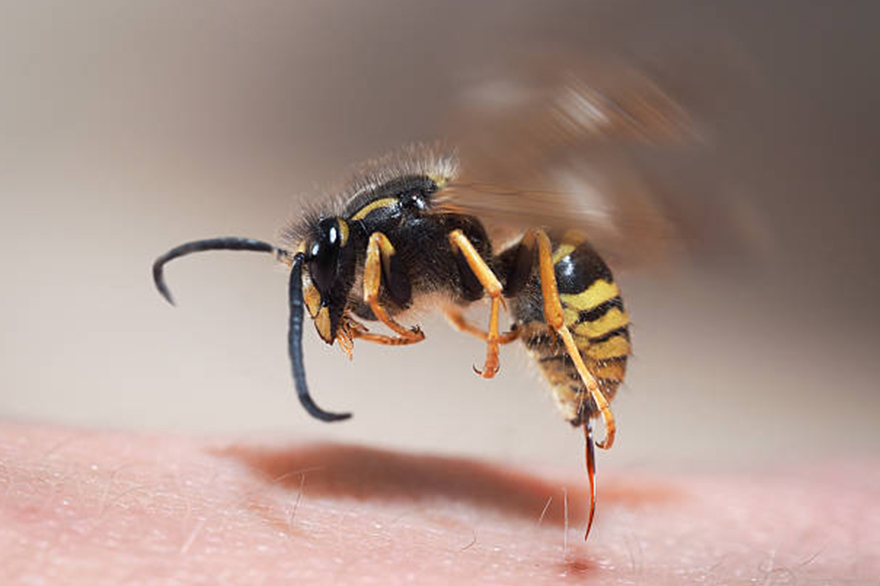
Hymenoptera Venom Allergy
Hymenoptera Venom Allergy (Bee – Wasp)
What Is a Systemic Allergic Reaction?
A bee or wasp sting normally causes local pain, redness, and swelling at the site of the sting. However, if symptoms develop away from the sting site or become generalized, involving organs beyond the skin, this is considered a systemic allergic reaction (anaphylaxis) caused by the insect venom.
Warning signs that require immediate medical attention include:
- Dizziness, weakness, or feeling faint
- Nausea, vomiting, or abdominal pain
- Coughing, chest tightness, or severe shortness of breath
- Generalized skin rash (hives or widespread redness)
Who Is at Risk and When Can It Occur?
Hymenoptera venom allergy can develop at any age, even without a previous history of allergic reactions. It may also occur in individuals who have experienced numerous previous stings without any reaction.
Although anyone can become sensitized, the risk is significantly higher among people who are frequently exposed to stinging insects, such as farmers and both professional and amateur beekeepers.
Why Is an Evaluation by an Allergist Essential?
Anaphylaxis following a Hymenoptera sting is a potentially life-threatening condition. A specialized allergy assessment is essential for two main reasons:
- Accurate Diagnosis: The appropriate clinical and laboratory tests are performed to accurately identify the insect responsible for the reaction (bee or wasp).
- Emergency Management Training: The patient is trained in the correct use of an epinephrine auto-injector and receives a clear, individualized action plan for the immediate management of a possible future sting.
A Long-Term Treatment Option: Venom Immunotherapy
In many cases, venom immunotherapy (VIT) can provide highly effective long-term protection. This treatment aims to desensitize the patient to the relevant insect venom and has success rates of up to 95%.
If you or someone close to you has experienced generalized symptoms following a bee or wasp sting, arrange a specialized allergy assessment promptly. Accurate diagnosis and appropriate venom immunotherapy can provide a high level of protection against severe allergic reactions following future stings.